How a Handmade Ruffle Pillow Is Made: 20 Hours of Hand-Stitching
2026-05-28 · Seema
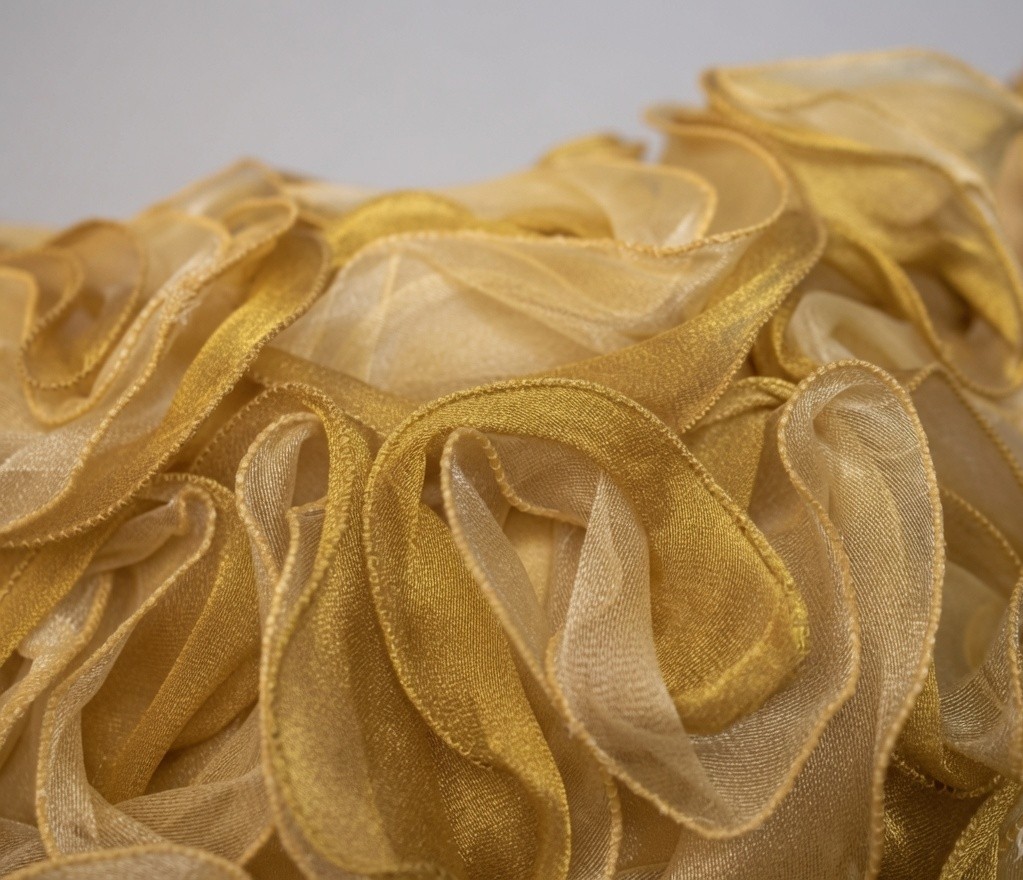
The most common message we get after someone receives one of our covers is some version of: "It looks even better in person." The second most common: "How long does one of these actually take to make?"
The honest answer is between four and twenty-two hours per cover, depending on the design. This piece is about what's happening in those hours — what each step actually involves, why we still do it by hand, and why a handmade ruffle cover costs what it does.
The fabric: layered sheer tissue, not solid cloth
The look that defines our ruffle pillows — the soft, weightless, almost cloud-like texture — comes from sheer tissue and organza, not from solid woven cloth. A single cover uses three to five layers of sheer fabric, sometimes more for the round 3D rose designs.
Each layer is cut to slightly different dimensions and stitched together so they catch the light at different angles. From across a room, this is what makes the cover look like it has depth. Up close, you can see the layers actually moving against each other when you press the pillow.
Step one: design and pattern
Every design starts on paper. We sketch the layout — where the roses go, how the ruffles flow, what colourway it'll come in — and make a single sample. Some designs make it past the sample stage; others don't. The ones that do become part of the season's catalogue.
Once a design is approved, we make a master pattern. The pattern is what gets traced onto the fabric in chalk before any stitching happens. For a round 3D rose pillow, the chalk lines are the rose spirals; for a burgundy ruffle, they're the ruffle paths.
Step two: cutting and base assembly
The base layer is cut first. This is the structural part of the cover — the part you don't see once the ornamentation is on. For an 18 × 18 cover, the base is cut a touch under 18 inches (about 17.5") so the finished cover sits taut on a 20-inch insert.
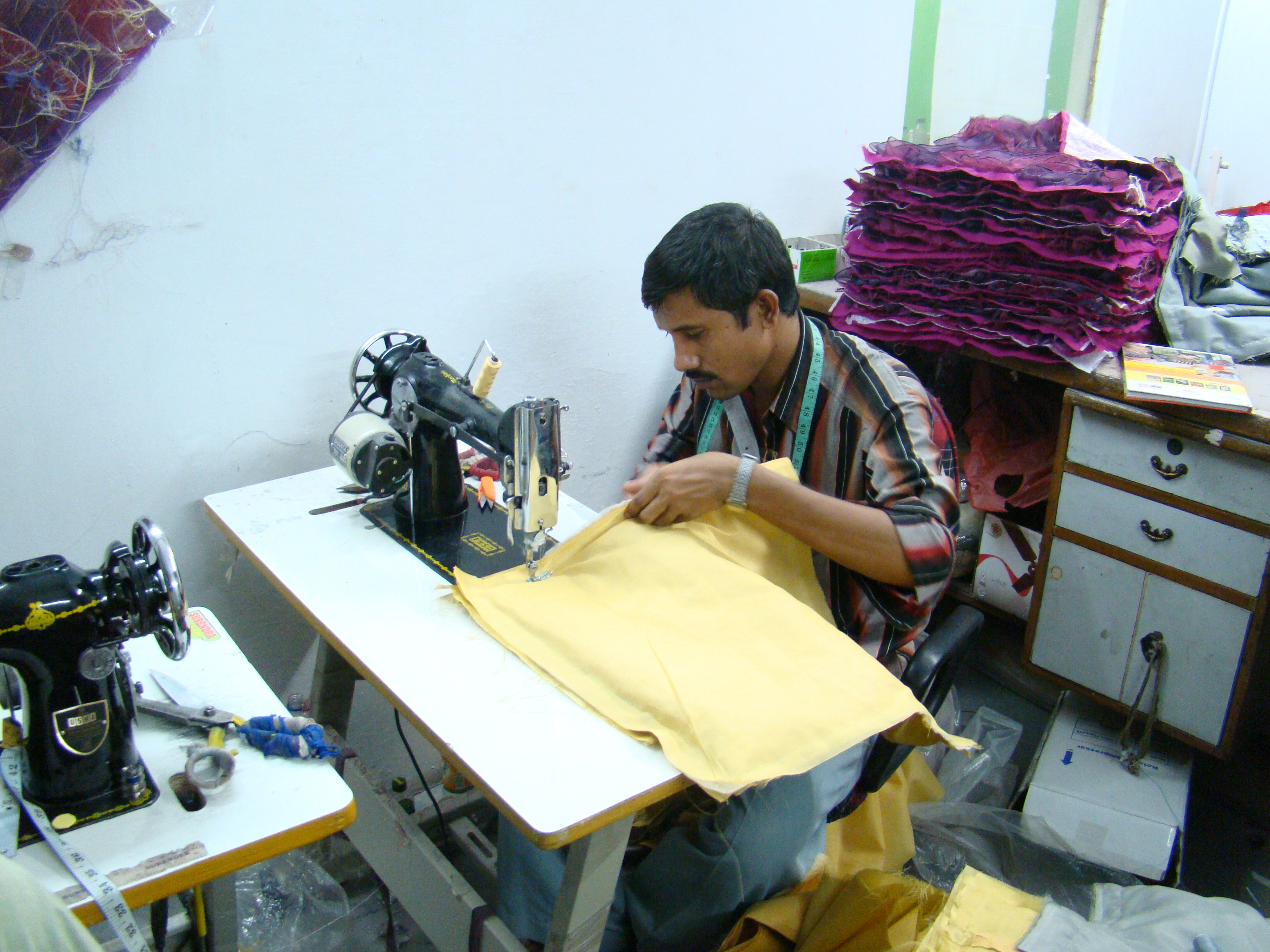
The base is hemmed, the seams are reinforced at the corners (this is where covers fail first if you don't), and the zip or envelope opening is set in. A standard cover takes about an hour at this stage.
Step three: the ruffle (where the time goes)
Now the slow part. For a ruffle cover, sheer-tissue strips — sometimes a kilometre or more in total length across one cover — are gathered along their long edge to create the ruffle texture, then stitched onto the base in spiralling or radiating patterns.
This is done one strip at a time on a machine but with the fabric guided entirely by hand. The artisan has to control the tension, the spacing, the angle of each pass, and the depth of the ruffle as they go. A machine can't do this — or rather, a machine can do something that looks like it, but the finished result is flat and uniform in a way that reads as factory-made the moment you see it next to a hand-stitched piece.
For a typical 18-inch ruffle cover, this stage alone takes between three and six hours. For the round 3D rose pillows — like the chocolate brown round or the magenta round — the rose itself takes longer than the rest of the cover combined.
Step four: the central rosette
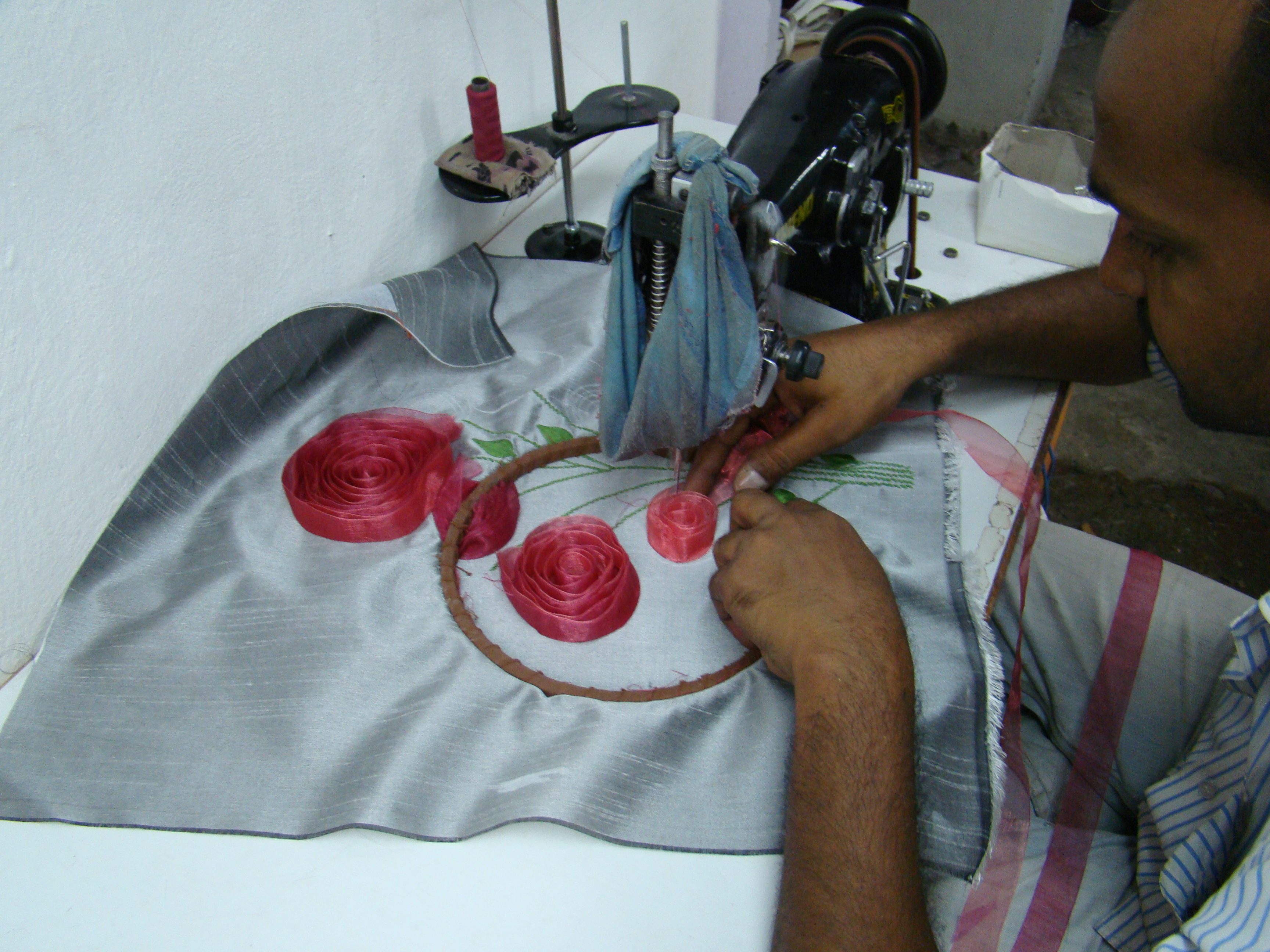
The 3D rose is the signature element of several of our designs. It's also the most time-consuming. Each rose is built up petal by petal: a strip of sheer organza is gathered, looped, and tacked into the base. The first loop is the centre; subsequent loops are larger and angled outwards to form the outer petals. Twenty to twenty-five petals per rose.
For a rose on the gold-brown 18 × 18 or the magenta round, the centre rose alone is about three hours. The rose has to be balanced — too tight and it looks like a button; too loose and it falls apart. Getting it right takes practice; the artisan who makes most of our 3D roses has been doing it for over fifteen years.
Step five: finishing and quality check
Once the ornamentation is on, the cover gets a final pass: loose threads trimmed, ruffle edges shaped, and the zip tested. Each cover is then checked against a finished sample of the same design — any cover that's noticeably different in size, tension, or rose placement gets set aside.
This is also when the cover gets pressed lightly (cool iron, on the backing only) to settle the ruffles. The press is gentle — pressing the ruffle side flat would defeat the point.
Why we still do it this way
It would be cheaper, faster, and easier to print a flat fabric with a ruffle-look pattern and stitch standard covers from it. Wayfair and Amazon do this — and you can tell the moment you see one in person.
The reason ours still cost between ₹1,699 and ₹2,499 is that you're paying for an artisan's time. Twenty hours of skilled handwork on a 3D rose cover. Six hours on a ruffle. Four hours on an embroidered piece like the brown gold-leaf or the ivory leaf.
It's the same reason a hand-knotted rug from Bhadohi costs more than a tufted one from a factory: the rug isn't different, the hours are different. And the hours are what makes a hand-knotted rug last fifty years instead of five.
What this means for buyers
A few things worth knowing if you're considering one of our covers:
- No two are identical. Tiny shifts in how a rose tilts or a frill lands are the hallmark of real handwork. We don't try to suppress this — it's the difference between a handmade cover and a factory copy.
- Care matters. A handmade cover lasts decades if you spot-clean and hand-wash. Machine-wash one and the ruffles compress. We've written a separate care guide if you want the specifics.
- Lead times can stretch. Most covers ship within three to five business days. The 3D rose designs sometimes take seven to ten if we don't have them in stock — because we won't ship a sample that hasn't been through a full quality check.
If you want to see the studio for yourself, our studio story page has photos. And if you've been on the fence about one of these — the full collection is here.