Caring for Sheer Organza and Tissue Pillow Covers
2026-05-01 · Seema
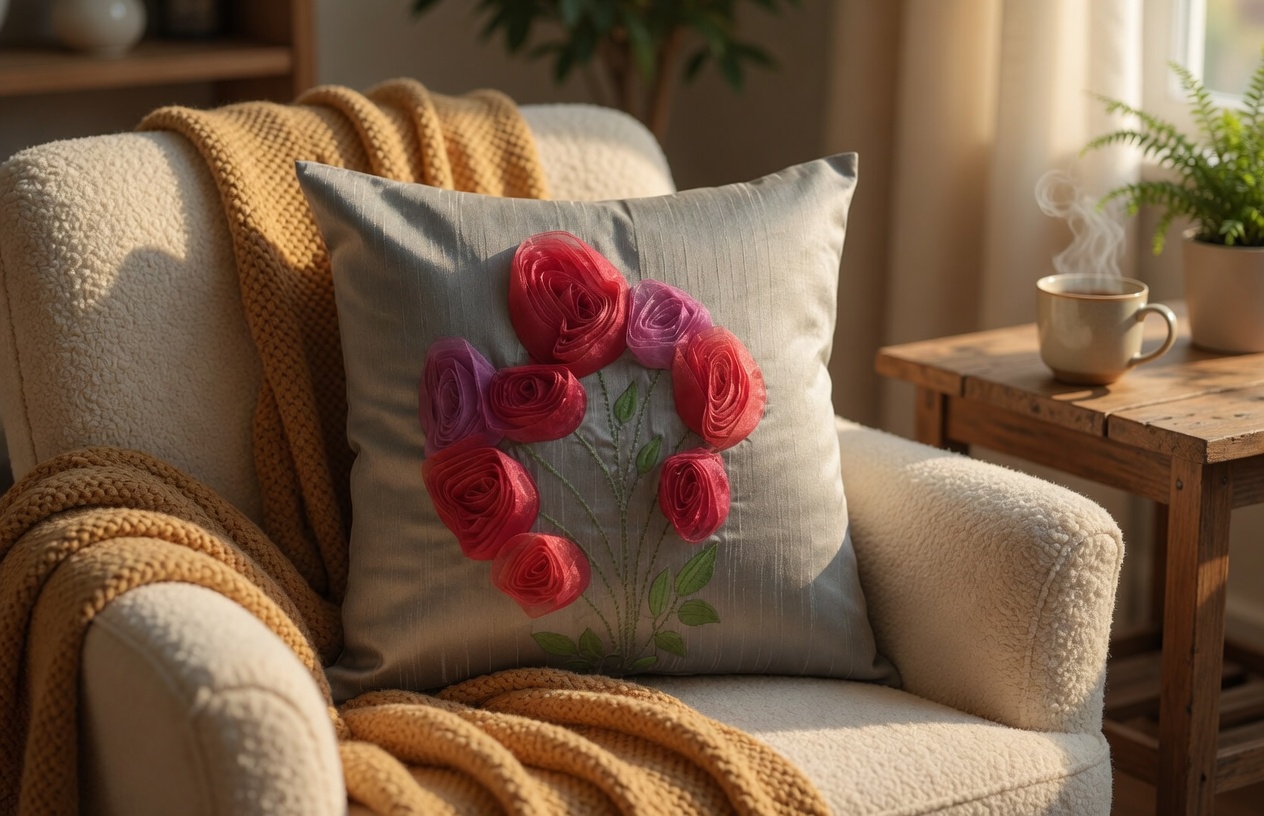
Our handmade ruffle and 3D rose covers are made from layered sheer tissue and organza — fabrics that, when treated right, hold their texture and definition for decades. Treated wrong, the ruffle compresses, the rose flattens, and the cover looks dull.
The good news is that "treated right" mostly means knowing two things: when to spot-clean instead of wash, and what never to do. This guide covers both, plus how to store off-season and how to fix small problems like loose ruffles without sending the cover anywhere.
What organza and sheer tissue actually are
Organza is a thin, plain-weave fabric originally made from silk and now also made from polyester. It's stiff enough to hold shape — which is why our ruffles stand up the way they do — but it's also delicate to abrasion, hot water, and harsh detergent.
"Sheer tissue" in our covers refers to the same general fabric family — lightweight, semi-transparent, structured. Wikipedia's organza entry has more on the weave if you're curious.
Both fabrics share a few care characteristics: they don't like heat, they don't like friction, and they don't like wringing.
The covers this guide most applies to: our ruffle and 3D rose pieces — the magenta round, the plum-fuchsia ruffle, the champagne gold ruffle, the burgundy red ruffle, and the chocolate brown rose round. The embroidered pieces (the ivory leaf, the brown gold-leaf) are a bit more forgiving but should still follow the same rules.
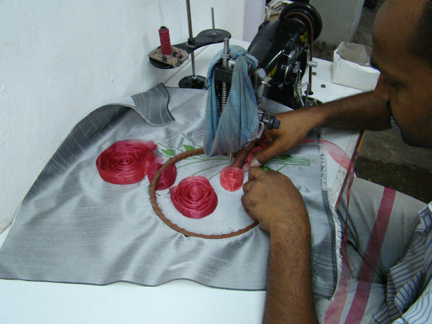
The decision tree: spot-clean or hand-wash?
Use this as your default:
- Spot-clean if: there's a small stain (food, drink, makeup) in one area and the rest of the cover is clean. Almost always spot-clean.
- Hand-wash if: the cover has been used for many months and feels generally dusty or dull, or if a stain has spread.
- Dry-clean if: the cover has heavy embroidery or appliqué and a hand-wash would risk pulling threads loose. Take to a dry-cleaner who works with delicate textiles. Tell them "delicate organza, no press" explicitly.
- Never machine-wash. Always. No exceptions.
How to spot-clean
Four steps. Do them in order.
- Blot — don't rub — the stain with a clean dry cloth. Rubbing pushes the stain into the fabric and damages the ruffle structure.
- Mix a tiny amount of mild soap (Ezee, Genteel, or any wool-safe detergent) with cool water — about a teaspoon per cup.
- Dip a soft cloth or cotton pad into the solution. Press gently on the stain. Don't soak the cover.
- Pat dry with a clean towel. Let air-dry flat in shade. Don't use a hairdryer.
Spot-cleaning works for over 90% of cleaning needs on a sheer-tissue cover.
How to hand-wash (when you must)
If the cover genuinely needs a full wash:
- Fill a sink or bucket with cool (not cold, not warm) water — around 20–25°C.
- Add a teaspoon of wool-safe or delicate detergent. Stir to dissolve.
- Submerge the cover. Squish gently — like dough — for 1–2 minutes. Don't twist, don't wring, don't scrub.
- Drain. Refill with clean cool water. Rinse the cover the same way.
- Press the water out by laying the cover flat between two clean towels and pressing down. Do not wring.
- Lay flat to dry in shade. Re-shape any compressed ruffles with your fingers while it's still damp.
A correctly hand-washed organza cover comes out looking like new. A wrung-out or hot-washed one comes out looking like a damp dishrag and never quite recovers.
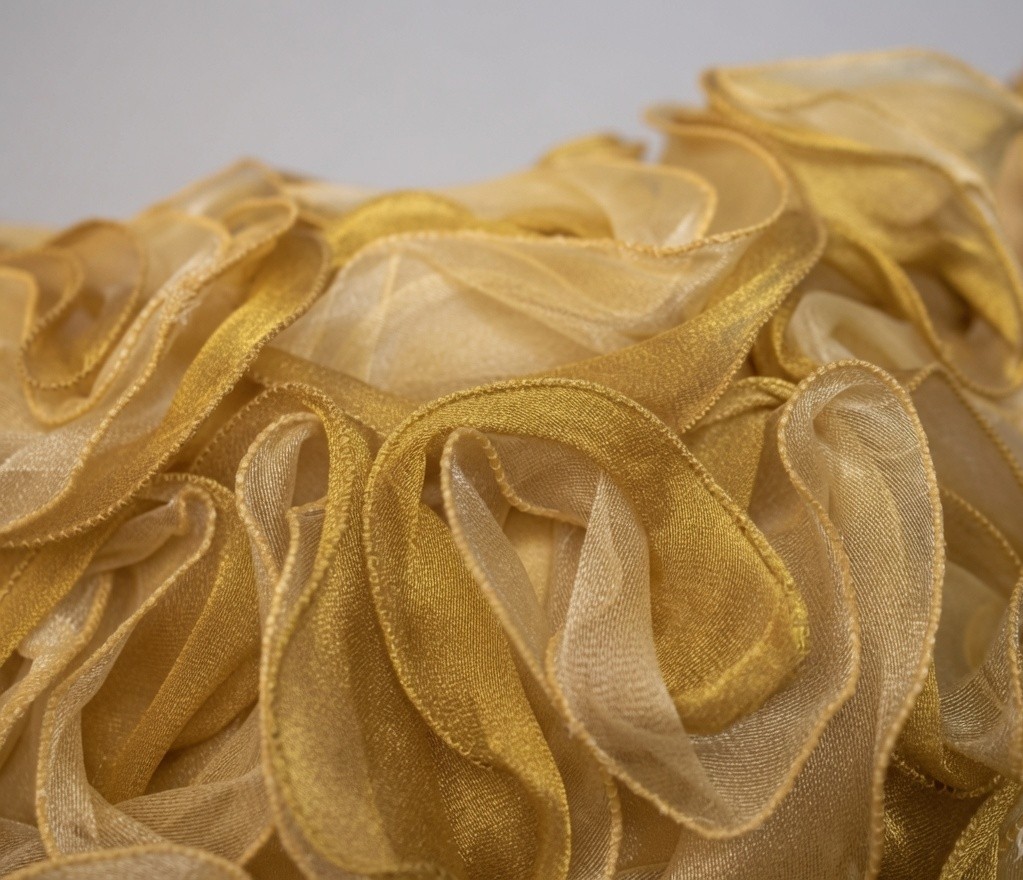
What to never do
The fastest way to ruin a sheer-tissue cover:
- Machine-wash. Even on "delicate" — the agitation crushes ruffles and embroidery.
- Tumble-dry. Hot air shrinks the polyester organza unevenly. The cover comes out warped.
- Iron on the ruffle side. Flat presses the ruffle. If you must press, use a cool iron on the back of the cover only.
- Use bleach or strong stain removers. Bleaches eat the polyester fibres unevenly and leave bald patches that can't be fixed.
- Soak overnight. Prolonged water exposure can loosen dye in the embroidery thread.
- Wring or twist. Even when wet — the fabric structure depends on uncompressed layers. Wringing crushes them permanently.
Storing off-season
If you put a sheer-tissue cover away for several months (for example, swapping spring covers in for winter ones):
- Make sure the cover is clean and completely dry before storage. A small damp spot mildews quickly inside a sealed bag.
- Stuff the cover lightly with acid-free tissue paper to keep the ruffles and central rose from compressing under their own weight. Old white cotton t-shirts work fine if you don't have tissue paper.
- Store flat in a cotton or muslin bag. Don't use a plastic bag — plastic traps moisture and can yellow the fabric.
- Keep out of direct sunlight. Sun fades dyes over months even through fabric.
Done this way, a cover stored for six months comes out looking the same as the day you packed it.
Fixing small problems
Two common ones you can fix at home:
A ruffle looks crushed. Hold the area lightly steamed (a kettle works) for a few seconds — but don't bring the cover within an inch of the spout, just hold it in the steam plume. Then re-shape the ruffle by hand. Repeats most of the original spring.
A few stitches have come loose on the ruffle edge. Don't pull at the loose thread. Trim it close to the stitch line with sharp scissors. If the loose section is more than a centimetre, write to us — we'll send a few matching threads and a small needle, or arrange to take the cover back for repair if you're in India.
For larger repairs (a torn fabric layer, a rose that's come loose from the base), the cover should come back to the studio. Use customer support to arrange this.
One last note
A well-cared-for sheer-tissue cover lasts decades. Wayfair-grade machine-stitched covers don't, and the difference is mostly in how the care is handled. The covers we send out can outlive several sofas if you spot-clean them and store them right.
For the manufacturing side of the story, see how a handmade ruffle pillow is made. For the broader catalogue, browse the collection here.