Pillow Insert Size Guide: Why Your Cover Looks Flat
2026-06-01 · Seema
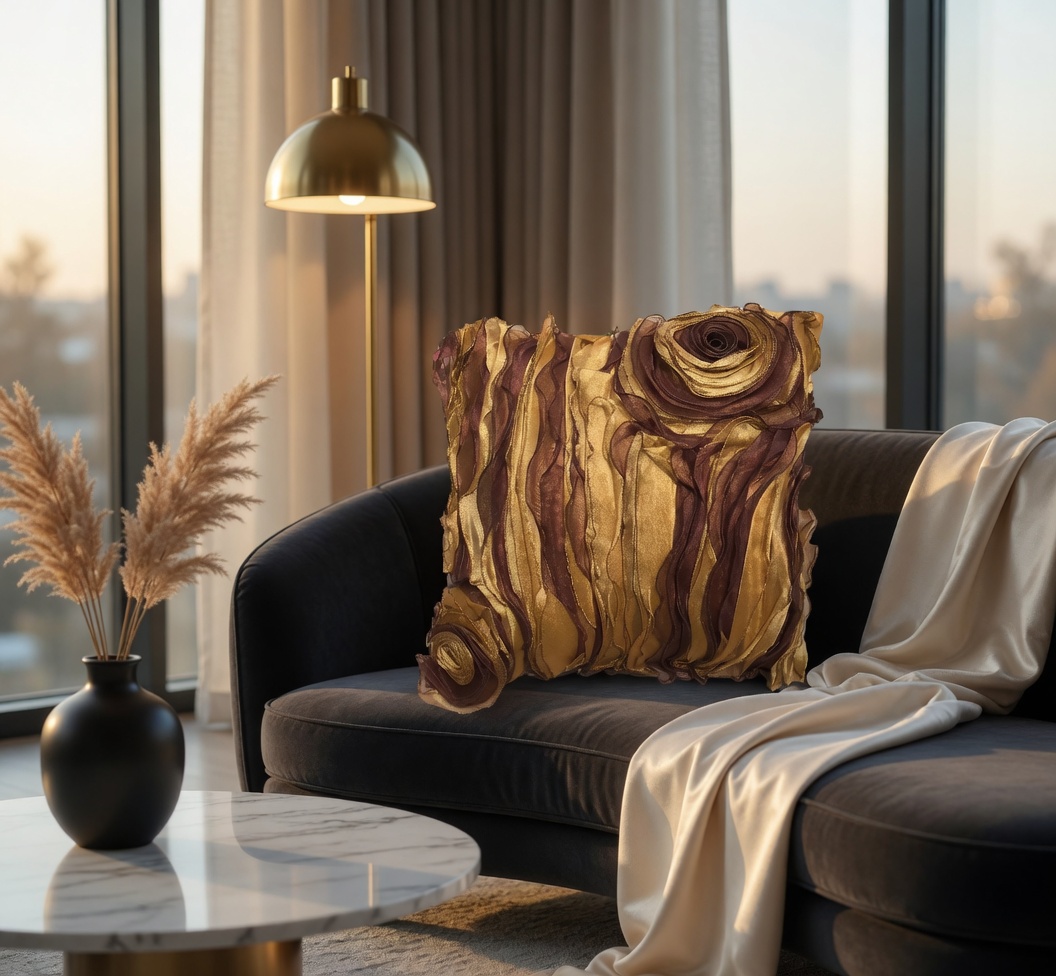
Of every question we get about our pillow covers, the most common — by a wide margin — is some version of: "My cover arrived but it looks flat. What did I do wrong?"
Nine times out of ten, the cover is fine. The problem is the insert. Specifically: it's the same size as the cover.
This guide covers the simple rule that fixes the problem (it's just one number), a reference table you can come back to, the difference between feather and microfibre fills, where to buy good inserts in India and internationally, and what to do if you're stuck with a flat pillow and don't want to buy anything new.
The 2-inch rule
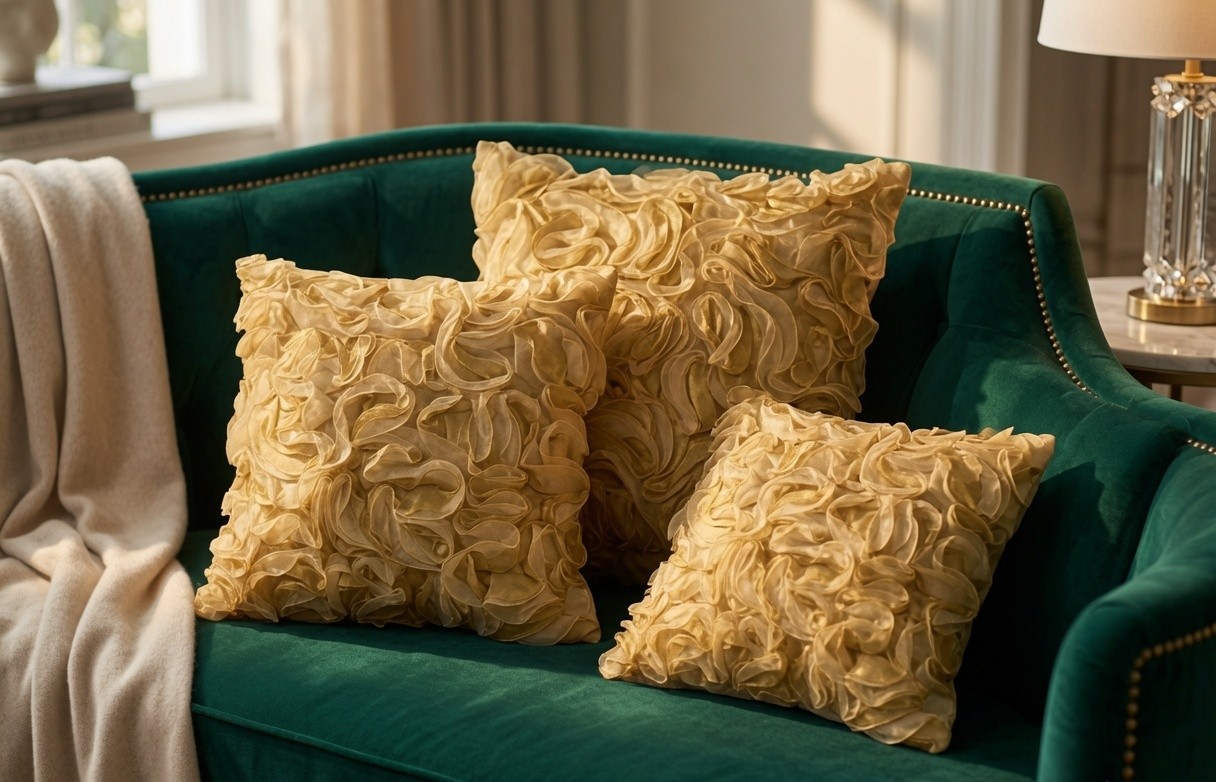
For a designer-grade, magazine-photo look — the kind where the pillow has shape, sits up on the sofa, and visibly fills the corners — buy an insert that's at least two inches larger than your cover in each dimension.
If your cover is 18 × 18 inches, buy a 20 × 20 inch insert. If your cover is 16 × 16, buy 18 × 18. If your cover is 20 × 20, buy 22 × 22.
The reason is straightforward. Cover-makers cut covers a touch under their listed dimensions so the seams hold up over time and the cover doesn't bag out. When you put an exact-size insert inside, the fabric has just barely enough material to wrap around — and the corners end up limp because there's nothing pushing the fill outwards. A two-inch-larger insert forces the cover to stretch slightly, which pushes the fill into the corners and gives the cover its plump shape.
Some shopkeepers and even some pillow brands will tell you to buy "the same size as the cover." That advice exists because it's safer — you can always trade plumpness for a softer, slouchier look later. But for the price you've paid for a handmade cover, you almost certainly want the plump version. Buy bigger.
Quick reference table
| Cover size | Plump look | Soft, slouchy look |
|---|---|---|
| 16 × 16 in | 18 × 18 in insert | 16 × 16 in insert |
| 18 × 18 in | 20 × 20 in insert | 18 × 18 in insert |
| 20 × 20 in | 22 × 22 in insert | 20 × 20 in insert |
| 12 × 20 in (lumbar) | 14 × 22 in | 12 × 20 in |
| 16 in round | 18 in round (or 18 in square) | 16 in round |
A 16-inch round insert is hard to find in some markets. If you can only find square, a square insert one size larger (18 × 18 for a 16-inch round cover) actually works well — it fills the round shape from inside and the corners are tucked under the seam.

Down, microfibre, or polyester?
Three common types of insert fill. Each handles differently:
- Feather and down. The classic choice and what most magazine-styled rooms use. Drapes softly, holds shape, can be plumped back by hand. Heavier and pricier. Look for a 90% feather / 10% down blend for the best balance — pure down is too soft for an accent pillow. See the Wikipedia entry on down for more on fill types.
- Polyester fibre (microfibre). The most common option in India and the cheapest. Holds shape well when new but compresses over time and is harder to plump back. Hypoallergenic, machine-washable, light. Good for everyday use and the only realistic choice for vegan households.
- Memory foam shreds. A newer option. Heavy, very firm, doesn't lose shape — but feels stiff and doesn't drape, which is wrong for a sheer-tissue ruffle cover. Skip for accent pillows.
Our recommendation for our handmade covers: a feather-and-down blend if you can find it (the ruffles and 3D roses look their best on a soft base that drapes), microfibre as a perfectly acceptable second choice.
Where to buy inserts in India
For Indian buyers, microfibre cushion inserts are widely available. The reliable options:
- Amazon India — search "cushion insert 20x20" or "pillow filler 20 inch." Brands like Story@Home, Solid Essentials, and Yark are dependable. Microfibre, usually under ₹500 for a 20-inch.
- FabIndia and Pepperfry — slightly more expensive but slightly higher fill density.
- Local upholsterers — every Indian city has someone who will stuff a cotton casing to any size you want for around ₹200–300. Ask for "kapok" or "polyester foam" fill, two inches larger than your cover.
Feather inserts are harder to find in India outside speciality home stores in Delhi and Mumbai. Online, IKEA India sometimes carries them seasonally.
Where to buy inserts internationally
For US, UK, EU, Canada, Australia and similar markets:
- IKEA — the FJÄDRAR feather insert in 20 × 20 inches is the single best value for money in this category. Available in almost every IKEA store worldwide. Pair with our 18-inch covers like the gold-brown 3D rose or the champagne gold ruffle for the plump look.
- Amazon — the Utopia Bedding range is a solid polyester option in every standard size. Inexpensive.
- The Pillow Insert Company (US) / Cushion Source (UK) — speciality online sellers for feather and down at higher price points.
If you're ordering one of our covers from outside India and don't want to wait, order the insert from one of these the same day so it arrives around the same time.
Fixing a flat pillow without buying anything new
If you already have a flat-looking pillow and don't want to buy another insert, three things help:
- Plump it by hand, daily. Pick the pillow up, squeeze it from all four corners towards the centre, give the centre a karate-chop, then place it back. This redistributes the fill into the corners. Five seconds. Surprisingly effective.
- Add a second insert. If your cover has any room at all, slide a small additional pad or a flat folded cotton scarf inside the existing insert. Cheap fix, big visible change.
- Put it in the sun for an hour. Polyester fibre fluffs back up considerably after warm dry air. Don't put direct sunlight on the cover side — flip the pillow so the back faces up.
If none of that works, the insert is genuinely too small for the cover. At that point, sizing up is the only real fix.
One last note
Different covers can behave differently. A flat woven cover with no ornamentation might look fine with an exact-size insert. But our handmade covers — the 3D rose rounds, the plum magenta ruffles, the burgundy floral — all have visible texture and ruffle on the front. That texture needs the cover to be slightly stretched for the layers to sit out properly. Always size up for those.
If you ever have a cover from us that doesn't look right and you've tried the larger insert, write to us — we'll take a look and figure out what's happening. Customer support is the fastest way through.
For more on the craft itself — why these covers take the time they do — read our piece on how a single ruffle pillow is made. Or, if you've been thinking about adding one to your room: browse the catalogue.