How to Style Throw Pillows: The Designer’s Cheat Sheet
2026-05-20 · Seema
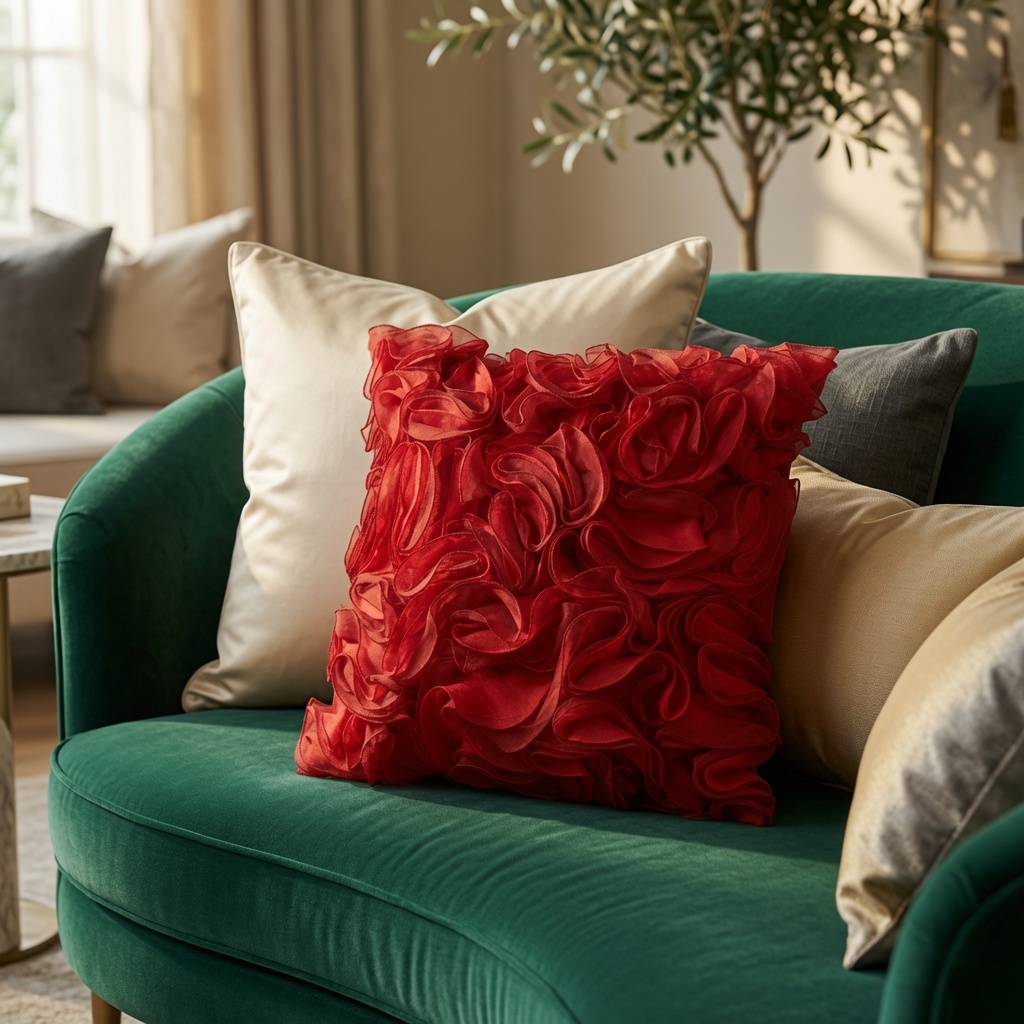
Most pillow questions break down into one of two categories: "what do I buy?" and "now that I've bought them, how do I arrange them?" This piece is for the second.
The good news is that you don't need to be an interior designer to get this right. There are six rules that experienced designers actually use, all of them quick, and the rest is taste. We'll go through each one with examples from our own catalogue — but the rules apply to any pillows, ours or anyone else's.
Rule 1: Use an odd number
Three pillows on a sofa, not two. Five on a king-size bed, not four. Seven on a large sectional, not six.
The reason is symmetry. An even number of pillows pulls the eye towards the centre of the sofa and reads as formal — fine for a hotel lobby, less interesting for a home. An odd number creates a small visual offset that the brain reads as casual and inviting. Designers know this; it's why almost every styled sofa in a magazine has either three or five pillows on it.
The exception is when you have two extremely large pillows. Two 24 × 24 pillows on a sofa can carry the space by themselves and don't need a third. Anything 20 × 20 or smaller, go odd.
Rule 2: Vary the size
Three pillows of the same size in a row looks like a sample display. Three pillows that step down in size — say, a 20 × 20 anchor, an 18 × 18 next to it, and a 12 × 20 lumbar in front — looks like an arrangement.
The cleanest starting formula:
- Two 20-inch or 22-inch square pillows at the back (anchors).
- One 18-inch square or smaller in front, in a different texture.
- Optional: a single lumbar at one end.
If you have an 18-inch sofa cushion, drop the anchor to 18 × 18 and step down from there.
Rule 3: Vary the texture (not just the colour)
This is the rule that separates a designer-looking arrangement from a beginner one. Three pillows in three different colours can still look flat if all three are smooth woven cotton. Three pillows in similar colours but in three different textures — say a smooth velvet, a ruffle, and an embroidered linen — read as layered and intentional.
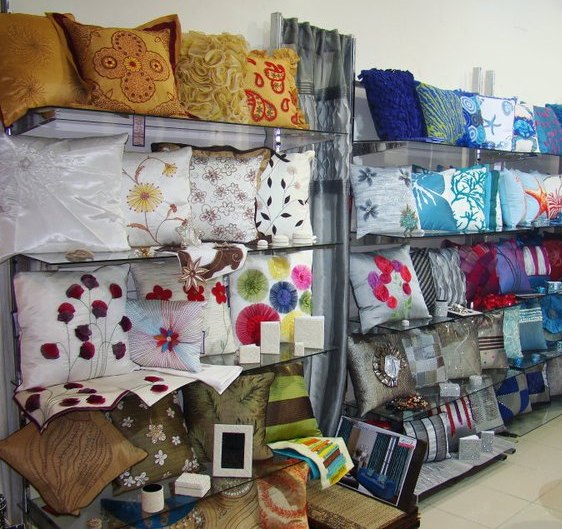
Our own catalogue is texture-heavy on purpose for this reason. A typical layered arrangement might pair:
- A smooth solid pillow (something you already own).
- An embroidered piece — the brown gold-leaf or the ivory leaf for depth.
- A ruffle for softness — the burgundy or champagne gold works on either warm or cool sofas.
The eye reads three different textures even before it registers three different colours.
Rule 4: Pick a single accent colour
Most rooms work best with one strong accent colour and two or three supporting neutrals. If your sofa is a neutral (beige, grey, cream, navy), one bold accent pillow will lift the entire arrangement without overwhelming it.
Good single-accent choices from our collection:
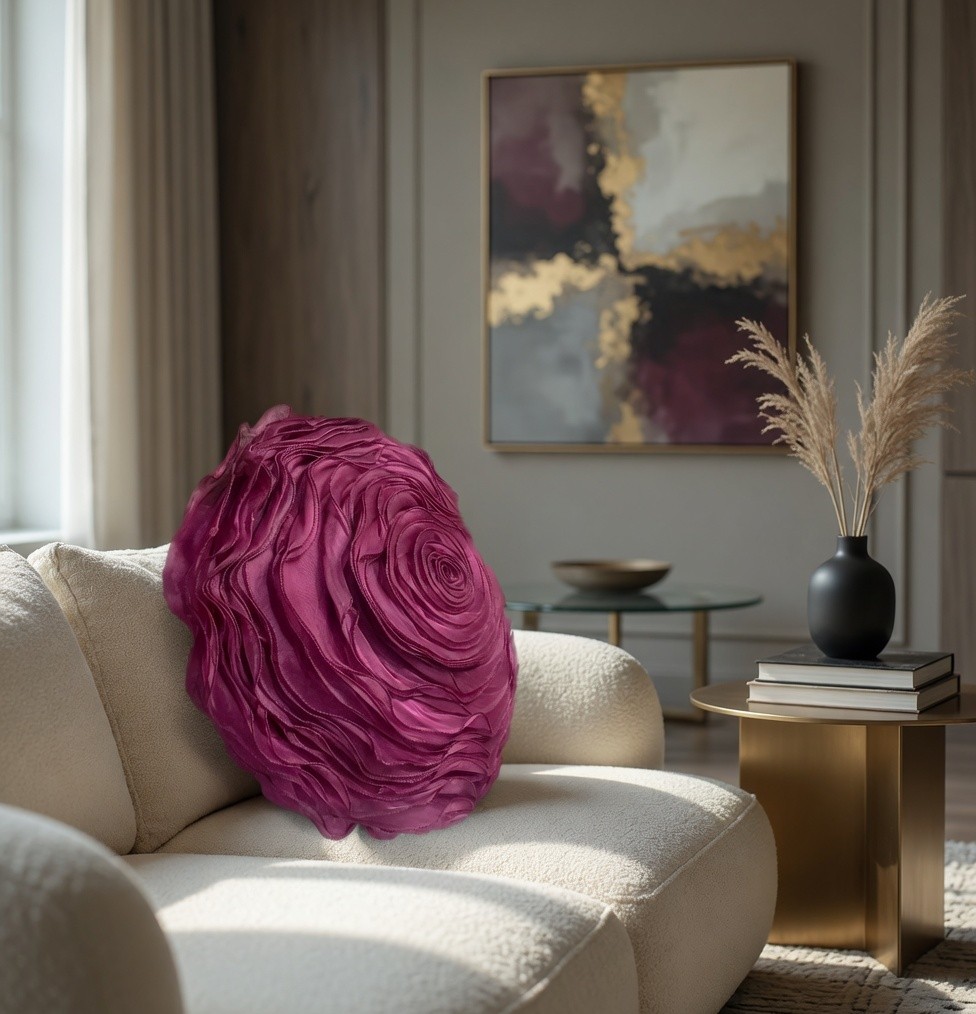
- Magenta — the round 3D rose against a beige or grey sofa is the most photographed combination we make. More on magenta here.
- Burgundy — the red ruffle pairs with both cool and warm sofas; it leans romantic without being saccharine.
- Champagne / gold — the champagne gold ruffle reads as a quiet luxury accent; it works especially well in cream and ivory rooms.
If your sofa is already a strong colour (jewel-toned, dark green, oxblood), invert the rule: pick two or three neutrals with subtle ornament and skip the accent.
Rule 5: Anchor with two, accent with one
For a three-pillow arrangement, the cleanest formula is two anchor pillows and one accent. The anchors carry the room's existing colour story; the accent is the pop.
A worked example for a cream or beige sofa:
- Anchor: a 20 × 20 in soft brown or champagne — the gold-brown rose or champagne ruffle.
- Anchor: a second 20 × 20 in the same neutral family but different texture — the ivory embroidered leaf works.
- Accent: a single 18 × 18 or smaller in a punchier colour — the burgundy ruffle or the magenta round.
For a darker sofa (charcoal, navy), invert: two anchors in soft cream or champagne, one accent in a richer warm tone like the chocolate rose.
Rule 6: Replace, don't stack
The most common mistake we see in customer photos is the slow accumulation of pillows on a sofa. Someone buys one new pillow, doesn't remove an old one, and ends up with seven pillows arranged in an apologetic pile.
Treat a new pillow as a replacement, not an addition. Buying a new ruffle? Remove an existing solid. Adding an embroidered piece? Take out a plain cotton one. The sofa should look intentional, not archaeological.
Five quick combinations to try
Worked-out arrangements from our own collection, each three pillows:
- Warm caramel: gold-brown rose + brown gold-leaf + champagne ruffle.
- Cream and quiet: ivory leaf + champagne ruffle + a single solid grey or off-white.
- Romantic: burgundy ruffle + champagne ruffle + ivory leaf.
- Bold accent: magenta round + two cream or beige anchors.
- Earthy autumn: chocolate rose round + brown gold-leaf + a plain linen oatmeal.
More extended combinations are in our 5 pillow combinations for a neutral living room post.
One last thing
Every rule in this list can be broken. Plenty of beautifully styled rooms have two pillows on the sofa, or three identical pillows in a row, or no accent colour at all. The rules are starting points, not commandments.
What matters is that the arrangement feels intentional — that a stranger walking into the room reads "someone arranged this on purpose," not "these accumulated here." If your arrangement passes that test, you're done.
Buying pillows as a gift rather than for your own sofa? The same rules apply, but the choices differ — we walk through them in handmade pillow covers as gifts.
If you want to see how individual pieces look in different rooms, browse the full collection or read about how a single ruffle pillow is made.